
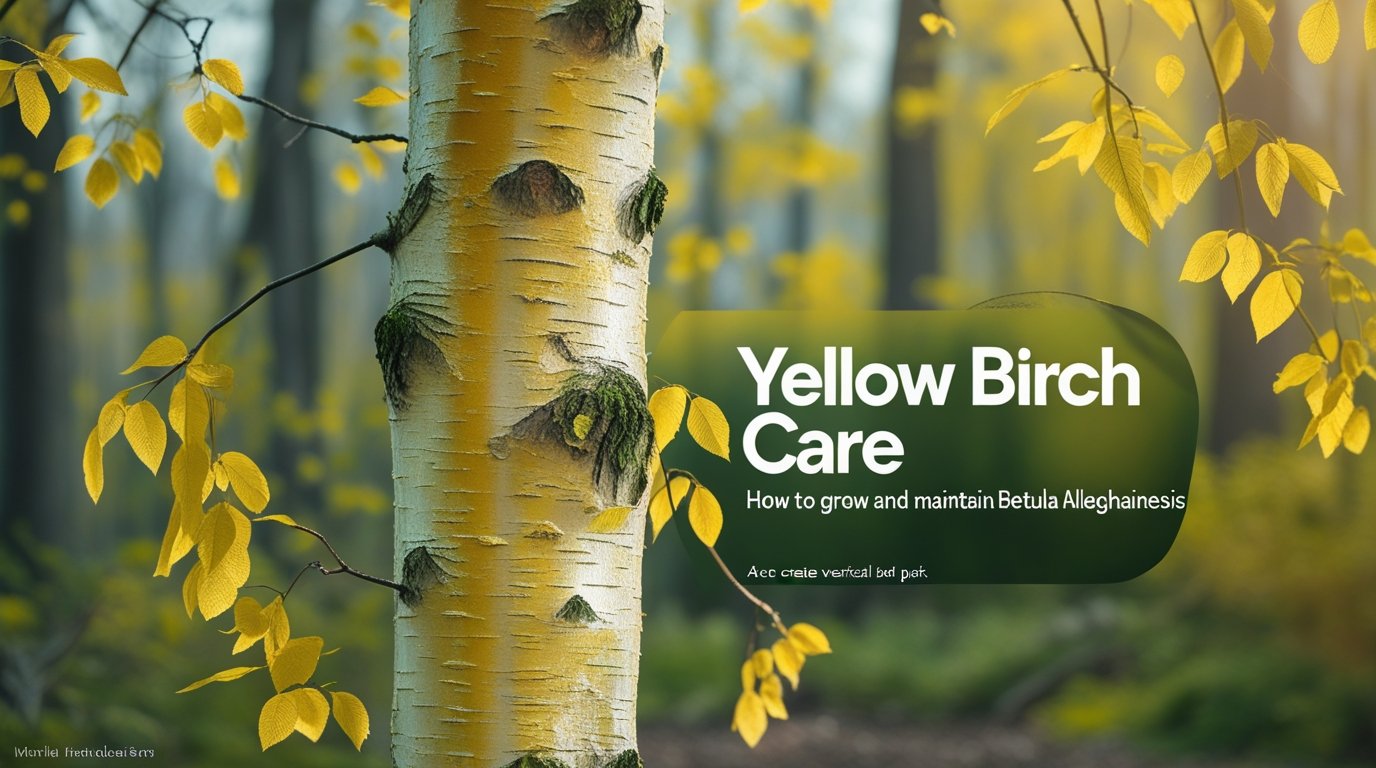
Get expert yellow birch care tips from my 10 years of experience. Learn planting, watering, pruning, and pest control for healthy trees in cooler USA climates.
I have grown yellow birch trees in my Ohio garden for 10 years, zone 6. You value their golden fall color and shiny bronze bark that peels in curls. This guide covers full yellow birch care for Betula alleghaniensis. I use lessons from my own specimens. Apply these steps in USDA zones 3-7 for strong results.
Advantages of Yellow Birch in Your Landscape
Yellow birch grows 60-75 feet tall and 30-50 feet wide. It offers light shade and yellow leaves in autumn. In my yard, one tree shades my woodland edge. The bark shifts from silver on young stems to bronze on mature trunks. Wood serves lumber; seeds feed birds.
Growth reaches 1 foot per year. Choose it for northern yards. University of Minnesota Extension notes, via related birch info, notes its preference for cool, moist sites.
Compare with other birches in my paper birch care guide.
Selecting and Planting Yellow Birch
Pick nursery trees with straight leaders and no scars. Select 5-7 feet tall stock.
Plant in spring after frost or early fall. Site in part shade to full sun; shade helps in warmer zones. Space 25-40 feet apart. Soil must stay moist, acidic, pH 4.5-6.0, rich in organic matter.
Dig hole three times root ball width, same depth. Mix soil with 30% leaf compost. Set tree; root flare at surface. Fill, tamp, water 3 gallons. Mulch 3-4 inches deep, away from trunk.
I planted a seedling in 2019 near a stream. It hit 15 feet by 2024.
Watering Schedule for Yellow Birch
Supply 1 inch water weekly first three years. Use drip irrigation for even moisture.
Adult trees require rain plus extra in dry periods. Probe soil 8 inches; water if dry. Yellow birch demands consistent dampness; avoid wet feet long-term.
During 2023 drought, I mulched heavily and watered biweekly. No wilt occurred. USDA Forest Service emphasizes moisture for vigor.
Fertilizing Practices
Feed in early spring with acid fertilizer, 12-6-6. Apply 0.5 pound per inch trunk diameter under canopy edge.
Test pH every two years. Add aluminum sulfate if above 6.5. I use holly-tone; leaves darken.
Do not fertilize newly planted or stressed trees.
See my acid-loving plant feeding tips.
Pruning Yellow Birch Trees
Prune in dormant period, January to March. Cut dead, broken, or rubbing branches to collar.
Open canopy for airflow. Remove no more than 20% yearly. Train young trees to single leader.
I thin mine every winter. It reduces wind damage. Avoid flush cuts.
Summer pruning risks borer entry.
Controlling Pests and Diseases
Bronze birch borer infests weak trees. Look for ridge dieback, exit holes. Maintain moisture; use trunk insecticide in May if needed.
Birch leafminer causes brown blotches. Pick affected leaves; apply systemic in spring.
Aphids drip honeydew. Blast with water or soap spray. I treat early; prevents sooty mold.
Canker diseases enter wounds. Prune clean; disinfect tools.
Healthy culture prevents most issues. My tree stays borer-free with care. Penn State Extension covers diagnostics.
For eco-friendly options, check my natural birch protection.
Winter Preparation
Add mulch layer in November. Pile 4 inches around base.
Water deeply before soil freezes. Wrap young trunks against rodents and sun.
Yellow birch endures -30°F. Protect from southwest sun to avoid bark cracks.
Propagation Techniques
Gather catkins in late summer. Extract seeds; stratify cold 90 days.
Root softwood cuttings in July. Use hormone, high humidity.
I propagated one via air layering; success in two months.
Solving Frequent Problems
Problem: Pale leaves. Solution: Iron deficiency; apply chelated iron.
Problem: Sparse canopy. Solution: Increase shade, moisture.
Problem: Bark dull. Solution: Normal with age; ensure health.
My yellow birch paled once; soil acidifier restored color fast.
Regional Adaptations Across the USA
Northeast: Ideal native; plant in woods.
Upper Midwest: Cool summers suit; mulch for winter.
Appalachians: Moist slopes perfect.
Limit to zones 3-7; heat harms south.
Find your zone on USDA Plant Hardiness Map.
Sustain Your Yellow Birch for Years
Stick to this care plan. Your yellow birch lives 100+ years in right spots. Harvest curls for decor sparingly.
I tap mine for sap occasionally. Start your routine now. Post questions in comments.
Leave a Reply