
Learn how to train pothos (Epipremnum aureum) to climb and cover a wall for a stunning living green wall. This guide includes support options, training techniques, and care tips to achieve full coverage without damaging surfaces.

I have trained pothos vines in various indoor setups over 10 years, including wall-mounted displays in zone 6 conditions. Pothos, also known as devil’s ivy, naturally trails but responds well to training. Its aerial roots allow attachment to textured or supportive surfaces. With guidance, vines can spread across walls to form a lush, vertical green feature. This process requires patience, as full coverage may take 1-3 years depending on light, plant maturity, and starting size.
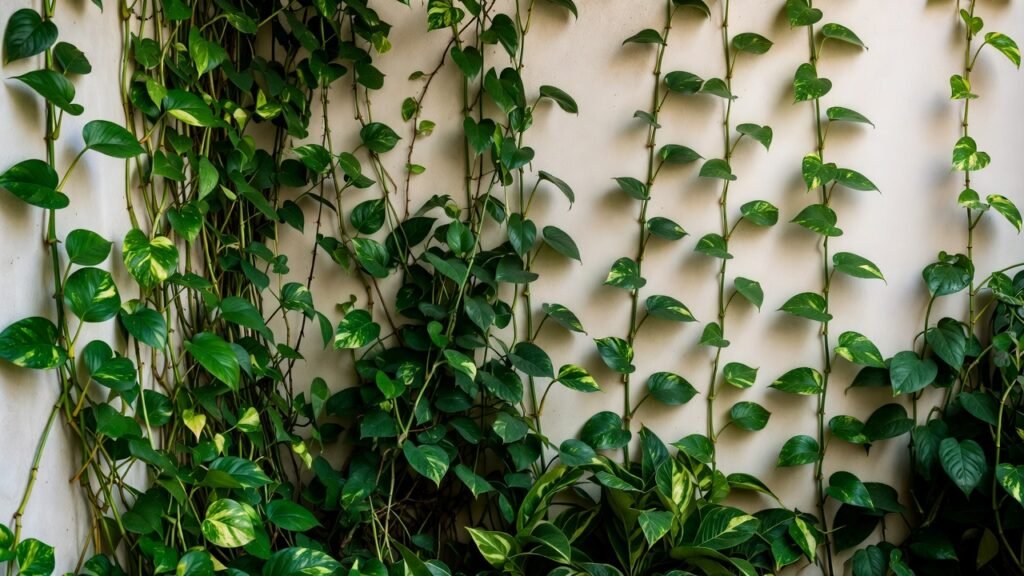
These images show mature pothos vines trained along walls, creating dense green coverage with heart-shaped leaves in various patterns.
Understanding Pothos Climbing Behavior
Pothos vines grow toward light and attach via aerial roots when provided with a suitable surface. Indoors, they do not climb independently like ivy but adhere when directed. Aerial roots grip porous or rough materials best. Direct contact with painted walls risks minor paint damage over time if roots embed. Use removable supports to prevent issues.
Selecting the Right Pothos and Location
Choose a vigorous, mature pothos with several long vines for faster results. Varieties such as golden pothos, marble queen, or neon pothos work equally well. Place the pot near the target wall in bright, indirect light. Pothos tolerates low light but grows slower and produces smaller leaves. Avoid direct sun to prevent leaf scorch.
Position the pot on the floor, a shelf, or hanging from the ceiling near the wall base. Ensure the area receives consistent humidity and temperatures between 18-27°C.
Materials Needed for Training
- Removable wall hooks: 3M Command hooks (clear or small wire types) hold vines without permanent damage.
- Plant ties or soft string: For gentle securing of vines.
- Optional supports: Moss pole, wire trellis, or bamboo canes for added structure.
- Scissors or pruning shears: For trimming to encourage bushiness.
Command hooks provide flexibility and easy removal.

These photographs illustrate pothos vines secured with clear hooks along a wall, showing progression from initial placement to dense coverage.
Step-by-Step Training Process
- Prepare the plant: Ensure the pothos has long, healthy vines. If vines are short, allow growth for several months before training.
- Install supports: Place the first hooks near the pot base or low on the wall. Add hooks progressively upward and outward in your desired pattern—vertical lines, zigzags, or full coverage.
- Guide the vines: Gently lift each vine and loop or drape it over hooks. Start with the longest vines. Twist vines loosely around hooks or ties if needed. Direct tips toward light sources for natural upward growth.
- Secure lightly: Use plant ties or string only where vines need extra hold. Avoid tight binding to prevent stem damage.
- Monitor and adjust: Check weekly. Add hooks as vines extend. Mist vines regularly to keep them flexible and encourage aerial root attachment.
- Prune strategically: Trim tips occasionally to promote branching and denser coverage. Remove damaged leaves promptly.
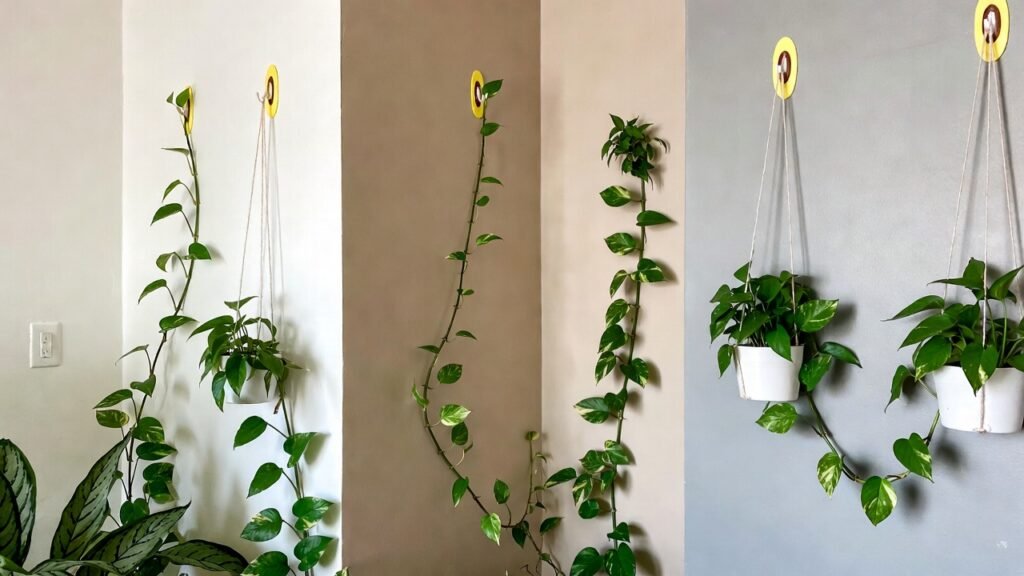
These visuals demonstrate the use of command hooks and string to guide pothos vines in geometric or organic patterns on interior walls.
Encouraging Faster Growth and Coverage
Provide bright, indirect light to stimulate vigorous extension. Supplement with grow lights if natural light is limited. Maintain even soil moisture—water when the top inch dries. Fertilize monthly during growing seasons with balanced liquid fertilizer diluted to half strength. Higher humidity (mist or pebble tray) supports larger leaves and stronger vines.
Potential Challenges and Solutions
- Slow progress: Increase light or propagate additional cuttings into the same pot for fuller starts.
- Paint concerns: Use removable hooks exclusively; avoid allowing roots to grip painted surfaces directly.
- Leggy growth: Pinch tips regularly to encourage lateral branching.
- Pests: Inspect for spider mites or mealybugs; treat with insecticidal soap if detected.
Maintenance for Long-Term Success
Rotate the pot occasionally for even growth. Repot every 1-2 years into fresh, well-draining soil. Prune excess length to maintain shape. In low-humidity environments, mist vines weekly.
For related vertical gardening ideas, see my guide on insulating outdoor pots for roots, adaptable for indoor container stability.
Training pothos to cover a wall transforms plain surfaces into living art. Begin with a modest pattern and expand as growth allows. Monitor progress and adjust supports accordingly.
Leave a Reply