
Learn how to grow peonies in pots with expert guidance. Discover container selection, planting depth, watering, fertilization, and overwintering for healthy blooms in USA gardens.
I have cultivated peonies in various settings for 10 years, including containers on patios in zone 6. Peonies thrive best in the ground, where roots expand freely and receive consistent moisture and temperature stability. Container cultivation demands extra attention to drainage, pot size, and winter protection, but it allows gardeners with limited space to enjoy these spectacular blooms. Herbaceous peonies adapt reasonably to pots for several years, while Itoh hybrids offer good performance in containers due to their compact habits.
These photographs illustrate blooming peonies in containers, showcasing vibrant pink and white varieties in garden settings.
Selecting Suitable Peony Varieties for Containers
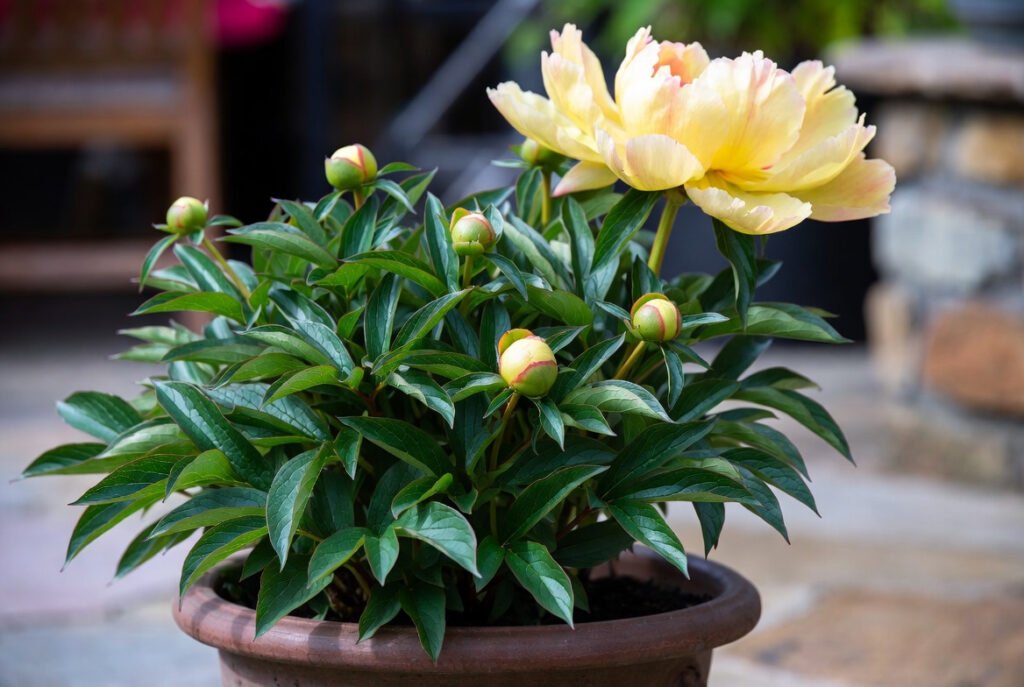
Choose compact or dwarf varieties to prevent overcrowding. Itoh (intersectional) peonies, such as ‘Bartzella’ or ‘Border Charm’, perform well due to their moderate size and vigor. Herbaceous types like ‘Oslo’, ‘Kiev’, or ‘Dublin’ remain smaller and suit pots effectively. Avoid large standard herbaceous varieties or tree peonies for long-term container growth, as they outgrow pots quickly.
Choosing the Right Container
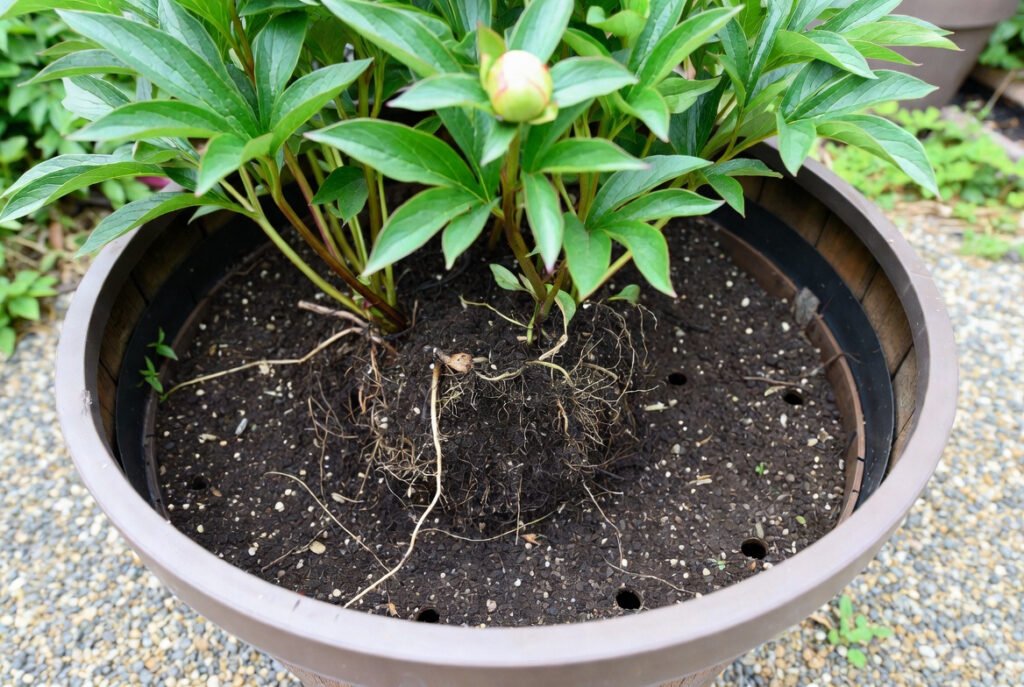
Select a large pot to accommodate root development. Use containers at least 18-24 inches wide and 18-24 inches deep, with a minimum capacity of 10-15 gallons. Larger sizes, such as 20 gallons, support better growth. Ensure multiple drainage holes exist to prevent root rot. Materials include wood, plastic, glazed ceramic, or whiskey barrels for durability and insulation.
Soil Preparation and Planting
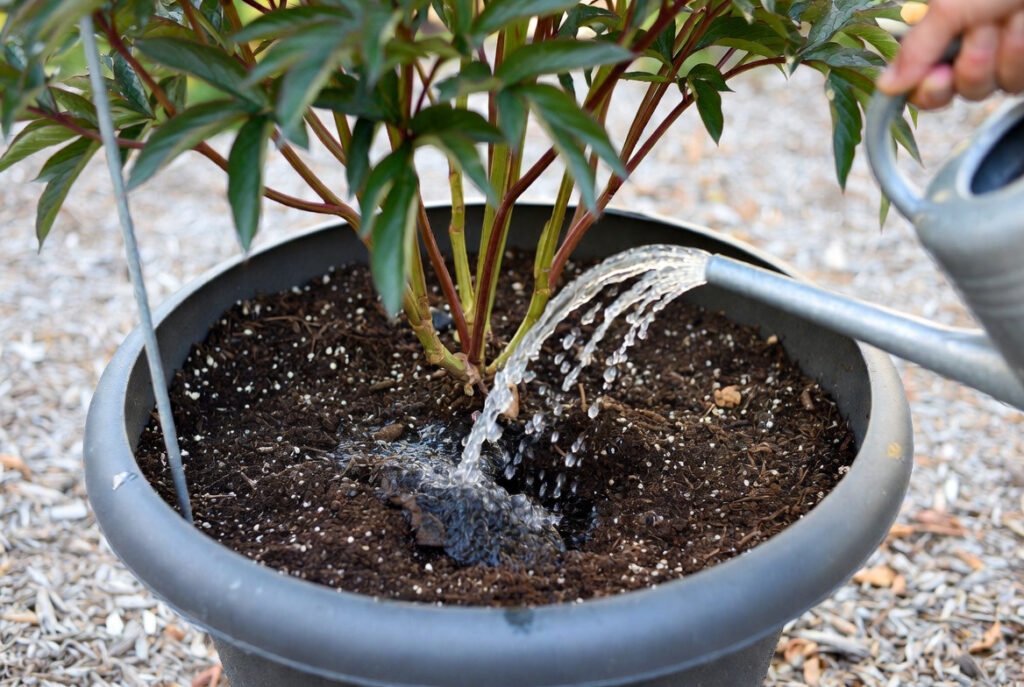
Use a well-draining potting mix amended with compost. Combine equal parts high-quality potting soil and compost, or add perlite for aeration. Plant in fall for root establishment or early spring. Position bare-root peonies with eyes (buds) 1-2 inches below soil surface. For potted plants, maintain the original soil level. Plant too deeply, and flowering diminishes. Water thoroughly after planting.
These images depict peonies in large pots with supportive structures and mulch.
Light and Location Requirements
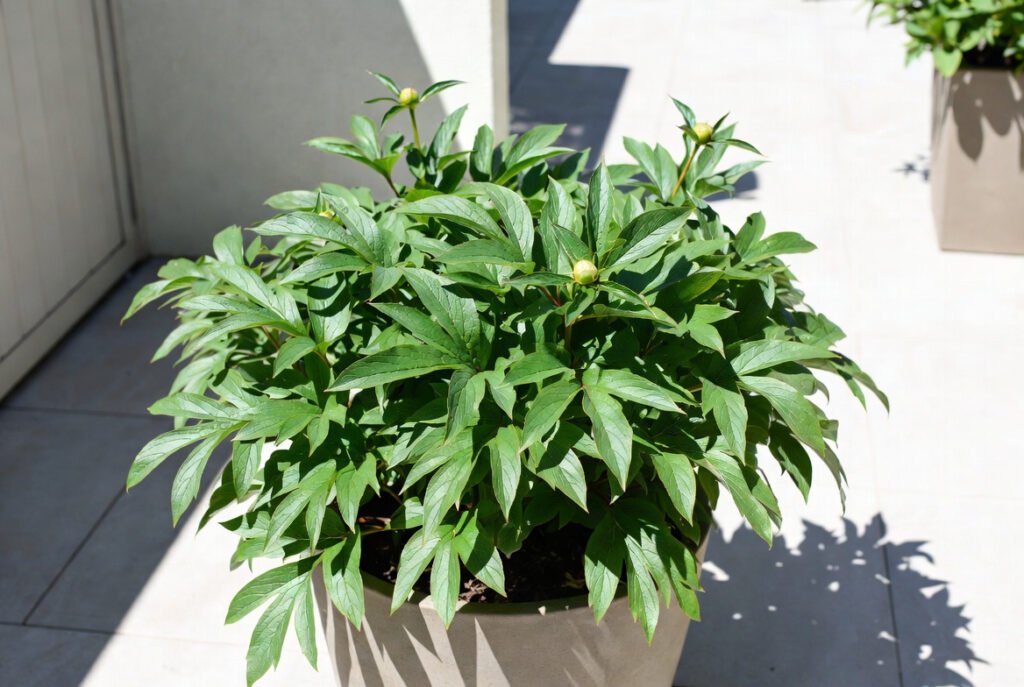
Place pots in full sun, providing 6-8 hours of direct sunlight daily. Partial shade works in hotter climates but may reduce blooms. Shelter from strong winds to protect heavy flowers.
Watering and Fertilization
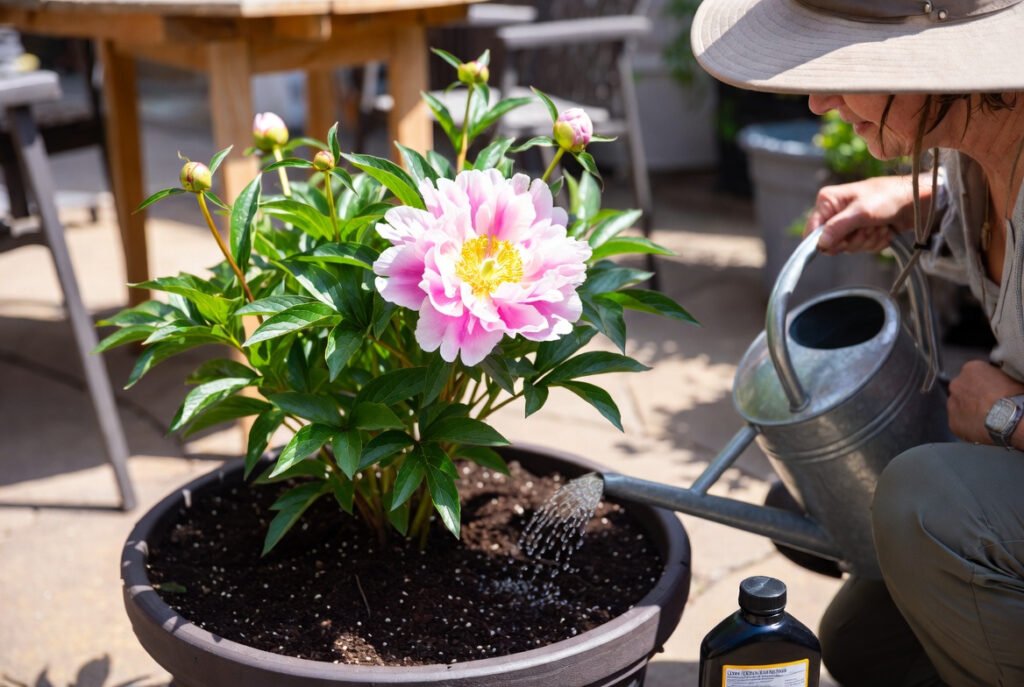
Maintain consistent moisture without waterlogging. Water weekly during active growth, allowing the top inch to dry slightly between sessions. Containers dry faster than ground soil, so check frequently. Apply balanced, low-nitrogen fertilizer in early spring, then every 4-6 weeks during the growing season. Use slow-release granules or liquid formulas diluted to half strength. Avoid excess nitrogen, which promotes foliage over flowers.
Support and Pruning
Install peony cages or stakes early as stems emerge to support blooms. Deadhead spent flowers to prevent seed formation and maintain appearance. Cut foliage to ground level in late fall after it yellows.
Overwintering Potted Peonies
Peonies require cold dormancy. In zones 5 and colder, move pots to unheated garages or insulate with bubble wrap and mulch. Bury pots in soil or group against a wall for protection. In milder zones, mulch heavily around bases. Ensure pots do not freeze solid, as roots suffer damage.
For container insulation techniques, refer to my post on insulating outdoor pots for roots.
Common Challenges and Solutions
Monitor for botrytis blight; remove affected parts and improve air circulation. Prevent root rot with excellent drainage. Repot every 3-4 years or when roots fill the container, though transplanting stresses plants. Many gardeners transition to the ground after a few seasons for longevity.
Reference authoritative sources such as Virginia Tech Extension on container peonies and Gardening Know How peony container guide.
Follow these practices for reliable results. Peonies in pots reward patience with impressive displays. Share your experiences or questions in the comments.
Leave a Reply